Ensuring Trust: Why Transparency Matters in Carbon Registries
Introduction
Carbon markets are rapidly evolving, and registries sit at the center of this transformation. They are the infrastructure layer that records, tracks, and verifies carbon credits—essentially acting as the “ledger of trust” in climate finance.
Yet, despite their critical role, many registries face questions of credibility and transparency. Who issued the credits? How were they validated? What methodologies were used? Without clear, accessible answers, confidence erodes, leading to hesitation from buyers, investors, and regulators.
Transparency isn’t just a best practice—it’s the foundation of a trusted and thriving carbon market. In this article, we’ll explore why transparency is so vital in carbon registries, the risks of opacity, and the practical steps registries can take to strengthen credibility.
1. Transparency Builds Market Confidence
Carbon registries are meant to be neutral, trusted intermediaries. Buyers rely on them to ensure that each credit represents a verified ton of CO₂ reduced or removed. However, if methodologies, baselines, or issuance processes remain opaque, doubts creep in.
Why It Matters:
Investors won’t put capital into markets they don’t trust.
Corporate buyers fear reputational risk from accusations of greenwashing.
Regulators demand evidence that credits are additional, measurable, and permanent.
Best Practice:
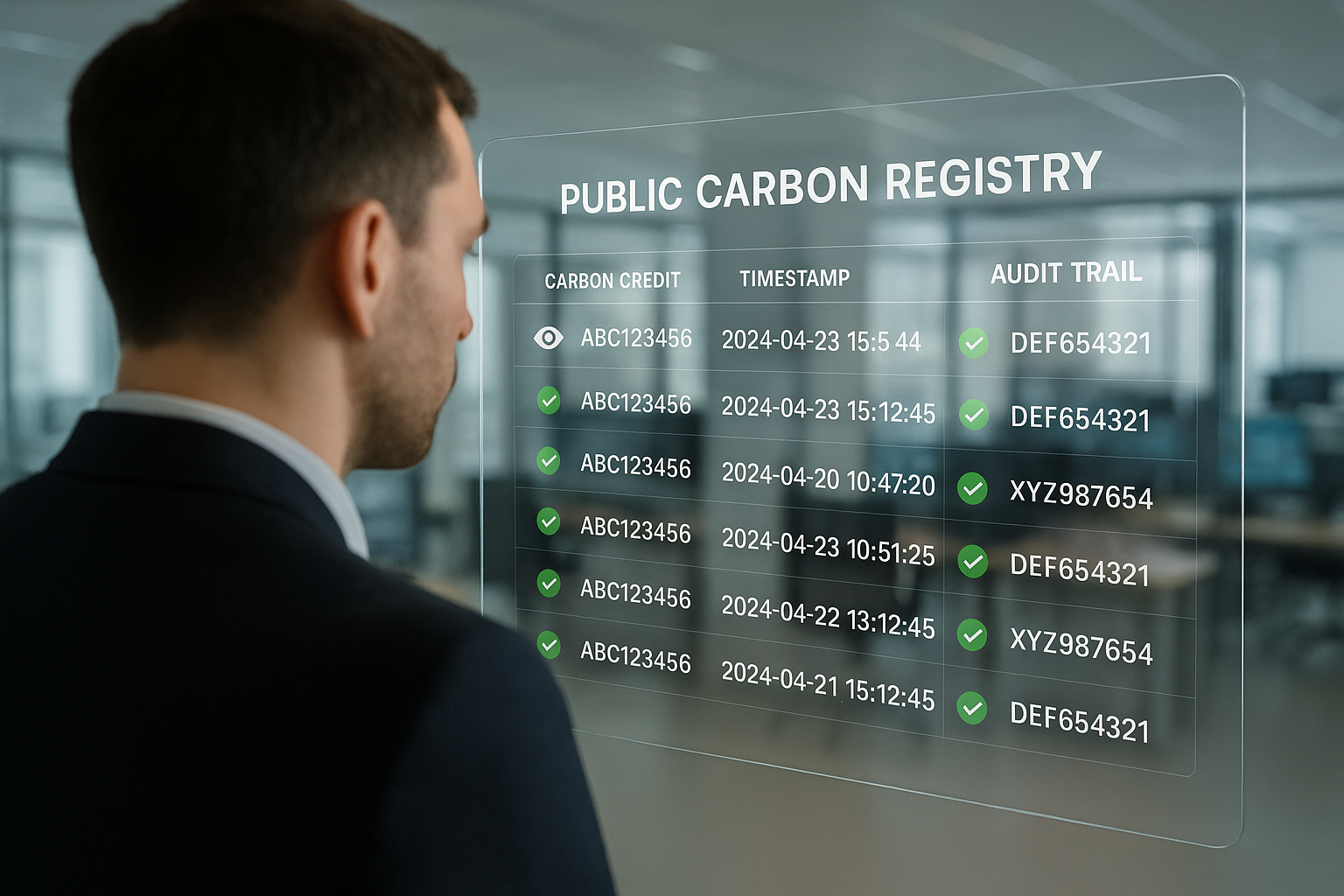
Publicly accessible project documentation, credit issuance records, and retirement logs ensure that all stakeholders can trace every credit from issuance to use.
2. Transparency Reduces the Risk of Double-Counting
Double-counting when the same carbon reduction is claimed by multiple parties is one of the most significant threats to carbon market integrity. Without transparent records, the same emission reduction might appear in both a corporate sustainability report and a country’s nationally determined contribution (NDC).
How Transparency Helps:
Open ledgers ensure credits are unique and traceable.
Inter-registry data sharing prevents duplication across systems.
Alignment with Article 6 of the Paris Agreement ensures that credits used internationally are clearly accounted for.
Example:
In early voluntary carbon markets, poor coordination between registries allowed multiple claims for the same forestry project. This reduced buyer confidence and slowed investment.
3. Transparency Strengthens Stakeholder Trust
Local communities, NGOs, and independent experts are often skeptical of carbon projects because they don’t have visibility into decision-making or credit flows. Lack of transparency can lead to community backlash or accusations of exploitation.
Why It Matters:
Projects that exclude local stakeholders often face opposition.
Social license is critical for long-term project success.
Best Practice:
Make methodologies, project impacts, and revenue flows public.
Engage local communities early, and share how credits benefit them.
Provide clear grievance mechanisms for disputes.
4. Transparency Enables Better Climate Outcomes
Without transparency, there’s a real risk that carbon credits will representpaper transactions instead of real-world climate impact. Transparent systems allow researchers, watchdogs, and buyers to analyze data and hold projects accountable.
Example:
Blockchain-based registries and digital MRV platforms are emerging to provide real-time visibility into credit issuance and retirement. By combining remote sensing with open ledgers, these systems allow anyone to see whether a credit represents genuine climate action.
Why It Matters:
Clear data encourages continuous improvement in methodologies.
Market players can identify and scale up high-quality projects.
Fraud and misrepresentation are easier to detect.
5. Transparency Meets Growing Regulatory Demands
The voluntary carbon market is moving closer to integration with compliance markets. Governments, investors, and auditors are demanding higher levels of disclosure. Registries that fail to provide transparent systems risk being excluded from future market frameworks.
Key Trends:
The Integrity Council for the Voluntary Carbon Market (ICVCM) is setting stricter core carbon principles.
The European Union and other regulators are drafting rules to ensure that claims made with carbon credits are substantiated.
Investors increasingly require environmental, social, and governance (ESG) disclosure as part of due diligence.
Best Practice:
Registries that anticipate regulation by embedding transparency today will be better positioned for tomorrow’s compliance-linked markets.
Practical Steps for Transparent Carbon Registries :
Public Databases: Maintain searchable, publicly accessible records of credit issuance, transfers, and retirements.
Methodology Disclosure: Publish all approved methodologies and their underlying assumptions.
Digital MRV Integration: Leverage satellite data, sensors, and blockchain to enhance visibility.
Audit Trails: Provide independent verification reports and make audit outcomes public.
Community Engagement: Share information with local stakeholders in accessible formats, not just technical reports.
Conclusion
Trust is the currency of carbon markets, and transparency is the engine that generates it. A registry without transparency is like a financial exchange without auditing—unsustainable and prone to collapse.
By committing to open data, inter-registry collaboration, digital MRV, and stakeholder engagement, carbon registries can ensure that every credit represents a real, verifiable climate benefit.
The message is clear: transparency isn’t optional—it’s existential.